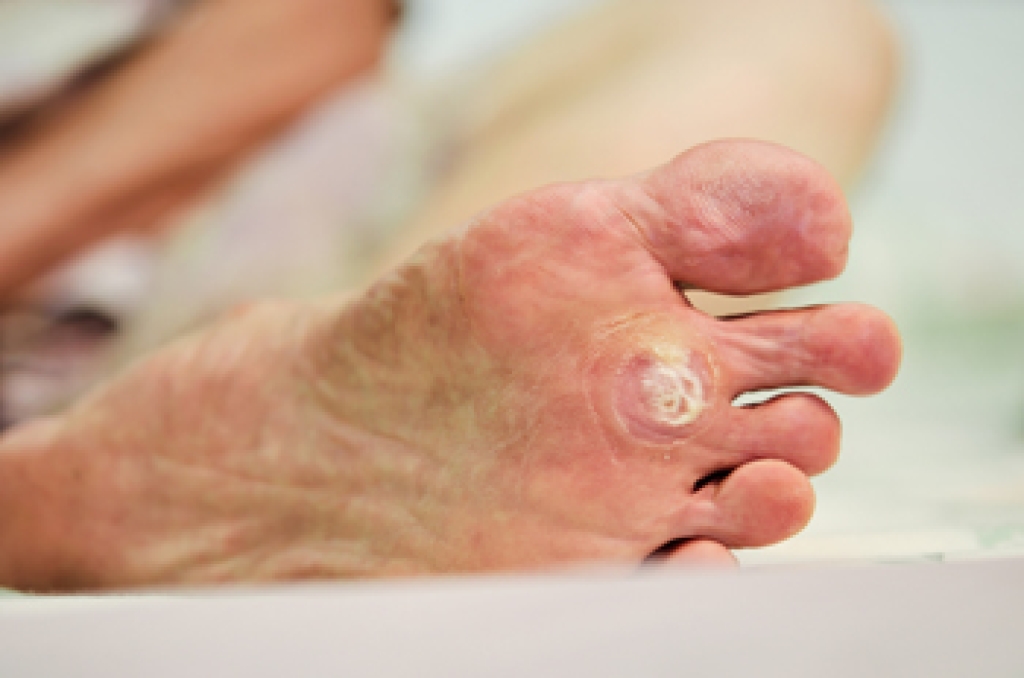
What Does a Plantar Wart Look Like?

As painful as a plantar wart can be, it is considered to be a harmless skin growth. It is a small area of hardened skin that is sometimes filled with black dots, which are blood vessels. It is caused by a fungus and develops on the sole of the foot. It generally grows inward as a result of the pressure the bottom of the foot endures from body weight. Many people experience extreme discomfort with a plantar wart and often look for prompt medical attention for relief. They are considered to be contagious, and it is beneficial to refrain from sharing towels, shoes, and socks. Medicine may be prescribed that can freeze the wart, or for stubborn plantar warts, surgery may be necessary for removal. It is beneficial to choose shoes that are comfortable, and avoid wearing any type of shoe that puts pressure on the heels. Some patients find it helpful to put a protective covering over the wart which may help to ease the pressure that is felt from walking. If you have developed a plantar wart, it is strongly urged that you are under the care of a podiatrist who can guide you toward the necessary treatment.

Plantar warts can be very uncomfortable. If you need your feet checked, contact one of our podiatrists from Dr. Jeffrey J. Betman & Associates . Our doctors will assist you with all of your foot and ankle needs.

About Plantar Warts

Plantar warts are the result of HPV, or human papillomavirus, getting into open wounds on the feet. They are mostly found on the heels or balls of the feet.

While plantar warts are generally harmless, those experiencing excessive pain or those suffering from diabetes or a compromised immune system require immediate medical care. Plantar warts are easily diagnosed, usually through scraping off a bit of rough skin or by getting a biopsy.

Symptoms

  • Lesions on the bottom of your feet, usually rough and grainy
  • Hard or thick callused spots
  • Wart seeds, which are small clotted blood vessels that look like little black spots
  • Pain, discomfort, or tenderness of your feet when walking or standing

Treatment

  • Freezing
  • Electric tool removal
  • Laser Treatment
  • Topical Creams (prescription only)
  • Over-the-counter medications

To help prevent developing plantar warts, avoid walking barefoot over abrasive surfaces that can cause cuts or wounds for HPV to get into. Avoiding direct contact with other warts, as well as not picking or rubbing existing warts, can help prevent the further spread of plantar warts. However, if you think you have developed plantar warts, speak to your podiatrist. He or she can diagnose the warts on your feet and recommend the appropriate treatment options.

If you have any questions, please feel free to contact our offices located in Northwest Chicago, Southwest Chicago, and Wicker Park, Chicago, IL . We offer the newest diagnostic and treatment technologies for all your foot care needs.


Read more about All About Plantar Warts

Shoe Selection for Seniors

A well-fitting shoe is the most important consideration when selecting shoes for an aging foot. Seniors should be particularly mindful of having their feet measured when they buy shoes as the foot changes as aging occurs. The arch can fall, and the foot can become longer and wider. Issues with the forefoot are common in seniors and properly fit shoes, with sufficient room in the toe box, will help in preventing pain in this area as well as problems with toenails and bunions. Shoe quality varies by brand and just because a shoe fits in one size with one brand or model does not mean it will when considering another brand or model. Visiting a podiatrist is helpful in understanding the right shoes for your feet as you age.

Proper foot care is something many older adults forget to consider. If you have any concerns about your feet and ankles, contact one of our podiatrists from Dr. Jeffrey J. Betman & Associates . Our doctors can provide the care you need to keep you pain-free and on your feet.

The Elderly and Their Feet

As we age we start to notice many changes in our body, but the elder population may not notice them right away. Medical conditions may prevent the elderly to take notice of their foot health right away. Poor vision is a lead contributor to not taking action for the elderly.

Common Conditions 

  • Neuropathy – can reduce feeling in the feet and can hide many life-threatening medical conditions.
  • Reduced flexibility – prevents the ability of proper toenail trimming, and foot cleaning. If left untreated, it may lead to further medical issues.
  • Foot sores – amongst the older population can be serious before they are discovered. Some of the problematic conditions they may face are:
  • Gouging toenails affecting nearby toe
  • Shoes that don’t fit properly
  • Pressure sores
  • Loss of circulation in legs & feet
  • Edema & swelling of feet and ankles

Susceptible Infections

Diabetes and poor circulation can cause general loss of sensitivity over the years, turning a simple cut into a serious issue.

If you have any questions, please feel free to contact our offices located in Northwest Chicago, Southwest Chicago, and Wicker Park, Chicago, IL . We offer the newest diagnostic and treatment technologies for all your foot care needs.
Read more about Elderly Foot Care

How Dangerous Is It to Wear High Heels?

Wearing high heels can cause various foot issues in women. Corns, Morton’s neuroma, and bunions are common conditions that can happen from frequently wearing high heels, and this can be a result of not having enough room for the toes to move freely in. Some women may develop toenail fungus from the constant pressure the nails endure as they are forced to lie against the front of the shoe. Additionally, the Achilles tendon may become shorter from the angle of the shoe, which can lead to developing plantar fasciitis or heel spurs. People who wear high heels may have an increased risk of falling and incurring an ankle injury from losing their balance. An alternative for wearing these types of stylish shoes may be to choose shoes that are wider in the toe area, and have a lower heel. If you have concerns about the possible foot conditions that can develop from wearing high heels, please contact a podiatrist who can answer any questions you may have.

High heels have a history of causing foot and ankle problems. If you have any concerns about your feet or ankles, contact one of our podiatrists from Dr. Jeffrey J. Betman & Associates . Our doctors can provide the care you need to keep you pain-free and on your feet.

Effects of High Heels on the Feet

High heels are popular shoes among women because of their many styles and societal appeal.  Despite this, high heels can still cause many health problems if worn too frequently.

Which Parts of My Body Will Be Affected by High Heels?

  • Ankle Joints
  • Achilles Tendon – May shorten and stiffen with prolonged wear
  • Balls of the Feet
  • Knees – Heels cause the knees to bend constantly, creating stress on them
  • Back – They decrease the spine’s ability to absorb shock, which may lead to back pain.  The vertebrae of the lower back may compress.

What Kinds of Foot Problems Can Develop from Wearing High Heels?

  • Corns
  • Calluses
  • Hammertoe
  • Bunions
  • Morton’s Neuroma
  • Plantar Fasciitis

How Can I Still Wear High Heels and Maintain Foot Health?

If you want to wear high heeled shoes, make sure that you are not wearing them every day, as this will help prevent long term physical problems.  Try wearing thicker heels as opposed to stilettos to distribute weight more evenly across the feet.  Always make sure you are wearing the proper shoes for the right occasion, such as sneakers for exercising.  If you walk to work, try carrying your heels with you and changing into them once you arrive at work.  Adding inserts to your heels can help cushion your feet and absorb shock. Full foot inserts or metatarsal pads are available. 

If you have any questions, please feel free to contact our offices located in Northwest Chicago, Southwest Chicago, and Wicker Park, Chicago, IL . We offer the newest diagnostic and treatment technologies for all your foot care needs.
Read more about Effect of High Heels on the Feet

Injury From a Winter Sport? Get the Care You Need

Winter sports can be fun for many – but only with the proper protective gear. Even with the right equipment, however, injuries can happen. If you’ve sustained foot or ankle trauma or a foot or ankle injury, we’re here to help.

Stretching and Strengthening the Achilles Tendon

Many problems can affect the Achilles tendon. Inflammation of the Achilles tendon is known as Achilles Tendonitis and is the most common injury to this site. It is generally caused by intense or excessive physical activity. If this condition is not treated properly, other afflictions can develop, such as Achilles tendinopathy where there is degeneration or damage to the collagen in the Achilles tendon, Achilles tendinosis where there are micro-tears to the tendon, and an Achilles tendon rupture where there is a partial or complete tear to the tendon. Symptoms of Achilles tendon issues include tightness, pain, weakness, and mobility issues. A variety of exercises can be done to generate healing and improve mobility. If you suffer from Achilles tendon discomfort, you should seek the counsel of a podiatrist for proper a diagnosis and treatment plan.

Achilles tendon injuries need immediate attention to avoid future complications. If you have any concerns, contact one of our podiatrists of Dr. Jeffrey J. Betman & Associates . Our doctors can provide the care you need to keep you pain-free and on your feet.

What Is the Achilles Tendon?

The Achilles tendon is a tendon that connects the lower leg muscles and calf to the heel of the foot. It is the strongest tendon in the human body and is essential for making movement possible. Because this tendon is such an integral part of the body, any injuries to it can create immense difficulties and should immediately be presented to a doctor.

What Are the Symptoms of an Achilles Tendon Injury?

There are various types of injuries that can affect the Achilles tendon. The two most common injuries are Achilles tendinitis and ruptures of the tendon.

Achilles Tendinitis Symptoms

  • Inflammation
  • Dull to severe pain
  • Increased blood flow to the tendon
  • Thickening of the tendon

Rupture Symptoms

  • Extreme pain and swelling in the foot
  • Total immobility

Treatment and Prevention

Achilles tendon injuries are diagnosed by a thorough physical evaluation, which can include an MRI. Treatment involves rest, physical therapy, and in some cases, surgery. However, various preventative measures can be taken to avoid these injuries, such as:

  • Thorough stretching of the tendon before and after exercise
  • Strengthening exercises like calf raises, squats, leg curls, leg extensions, leg raises, lunges, and leg presses

If you have any questions please feel free to contact our offices located in Northwest Chicago, Southwest Chicago, and Wicker Park, Chicago, IL . We offer the newest diagnostic tools and technology to treat your foot and ankle needs.

Read more about Achilles Tendon Injuries

Connect With Us